 70 Morley Cresent, Kelloe, Durham DH64NS
Resin Path Installation Cost: What Influences Labour & Base Prep?
When planning a new garden path, cost is often one of the first things homeowners consider. While resin surfaces are…

Why you can trust our content
At a glance
When planning a new garden path, cost is often one of the first things homeowners consider. While resin surfaces are known for their durability and appearance, the overall price depends on more than just the top layer.
Understanding resin path installation cost means looking at the full process, including labour, preparation, and materials. Each stage plays a role in determining how much you can expect to pay and how well the finished path will perform over time.
What is included in the resin path installation cost?
The total cost typically covers more than just the resin surface. A professional installation involves several stages, each contributing to the final price.
This usually includes:
When comparing quotes, it is important to ensure all these elements are clearly included.
Why does groundwork have such a big impact on cost?
Groundwork is often the most labour-intensive part of the installation. It sets the foundation for the path and directly affects its stability and lifespan.
Costs can increase depending on:
A well-prepared base may increase the initial resin path installation cost, but it helps prevent costly issues later.
How does labour influence the overall price?
Labour costs vary depending on the size and complexity of the project. Skilled installation requires experience and attention to detail, particularly during preparation and resin application.
Factors affecting labour costs include:
More complex projects will naturally require more time and expertise.
What materials are used, and how do they affect pricing?
The quality and quantity of materials used can significantly influence cost. High-quality materials tend to provide better durability and performance.
Common materials include:
Lower-quality materials may reduce upfront costs but can lead to quicker wear and higher maintenance.
How do resin driveway prices compare?
While paths and driveways share similar construction methods, there are differences in scale and requirements. Driveways are designed to handle vehicle loads, which often means deeper bases and more materials.
As a result:
Comparing resin driveway prices can provide useful context, but it is important to remember that each project is unique.
Can you reduce resin path installation cost?
There are ways to manage costs, but it is important not to compromise on essential elements like groundwork.
Potential ways to reduce costs include:
However, cutting back on preparation can lead to issues such as uneven surfaces or drainage problems.
How does site condition affect pricing?
Every property presents different challenges, which can influence the overall cost.
Common factors include:
These conditions can increase the resin path installation cost due to additional labour and materials.
Choose your preferred outdoor space finish?

Resin

Tarmac
It just takes 2 minutes
And then you can book a free consultation
What is the difference between basic and high-quality installation?
Not all installations are carried out to the same standard. A lower-cost option may involve minimal preparation, while a higher-quality approach focuses on long-term performance.
| Feature | Basic Installation | High-Quality Installation |
| Groundwork | Limited | Thorough and structured |
| Materials | Standard | Premium-grade |
| Drainage | Minimal planning | Fully integrated |
| Lifespan | Shorter | Long-lasting |
Understanding these differences helps explain variations in pricing.
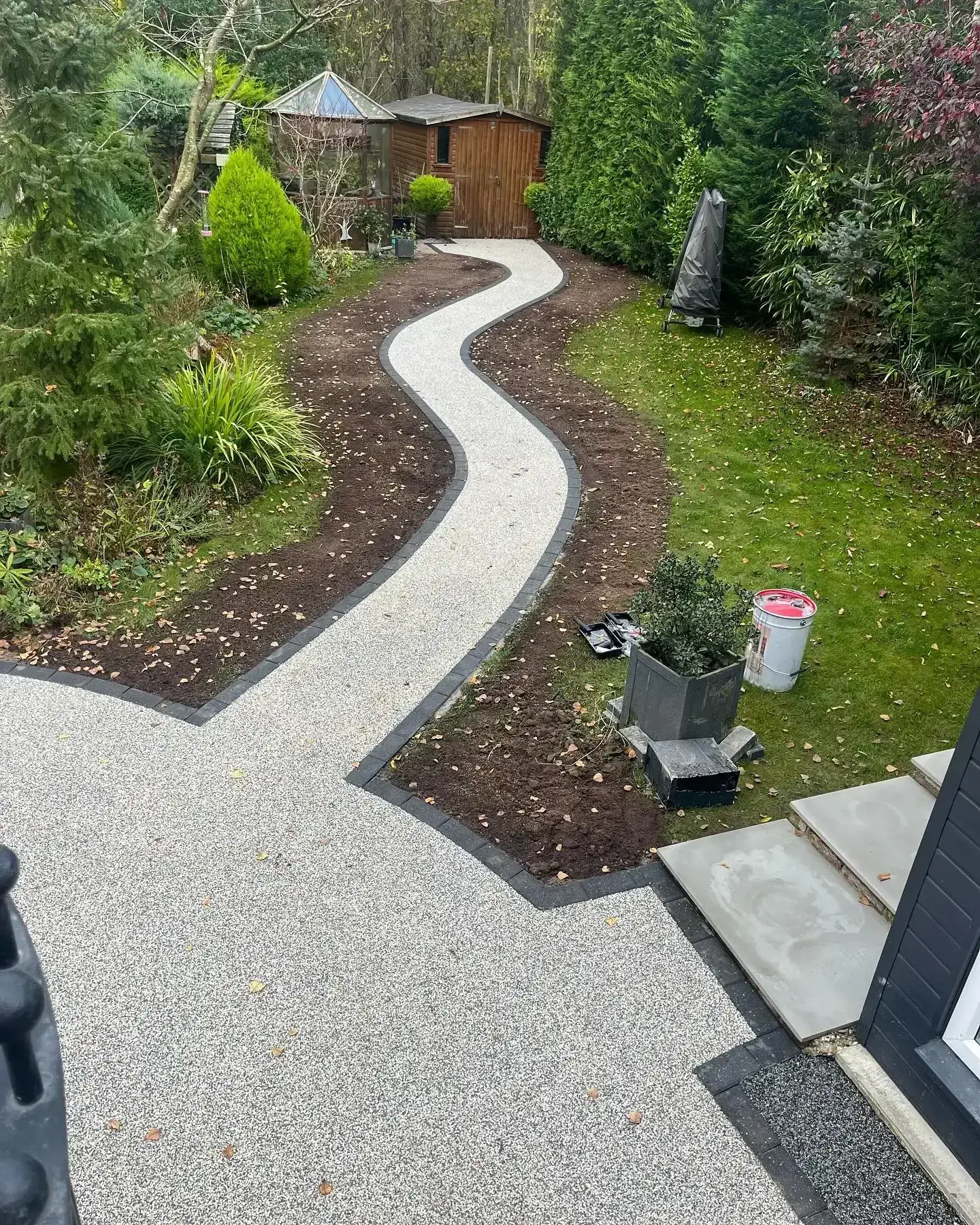
Case example: A garden path transformation
A homeowner wanted to replace a worn gravel path that became muddy during wet weather. The initial quote focused on surface application only, with minimal groundwork.
After further consultation, a full installation was recommended, including excavation and a new sub-base. Although the upfront cost increased, the result was a stable, low-maintenance path that performed well in all conditions.
How can you compare quotes effectively?
Comparing quotes is not just about looking at the final price. It is about understanding what is included.
Look for:
This approach helps ensure you are making a fair comparison.
Are cheaper options worth the risk?
Lower-cost installations may seem appealing, but they often involve compromises that affect performance.
Risks include:
Balancing cost with quality is key to achieving a reliable result.
The cost of installing a resin path is influenced by a range of factors, from labour and materials to the condition of the site. While it can be tempting to focus on the surface, the real value lies in the preparation beneath it.
By understanding what contributes to resin path installation cost, you can make more informed decisions and invest in a solution that offers long-term performance and reliability.
Related articles
Choose your preferred outdoor space finish?
Resin
Tarmac
At a glance
When planning a new garden path, cost is often one of the first things homeowners consider. While resin surfaces are known for their durability and appearance, the overall price depends on more than just the top layer.
Understanding resin path installation cost means looking at the full process, including labour, preparation, and materials. Each stage plays a role in determining how much you can expect to pay and how well the finished path will perform over time.
What is included in the resin path installation cost?
The total cost typically covers more than just the resin surface. A professional installation involves several stages, each contributing to the final price.
This usually includes:
When comparing quotes, it is important to ensure all these elements are clearly included.
Why does groundwork have such a big impact on cost?
Groundwork is often the most labour-intensive part of the installation. It sets the foundation for the path and directly affects its stability and lifespan.
Costs can increase depending on:
A well-prepared base may increase the initial resin path installation cost, but it helps prevent costly issues later.
How does labour influence the overall price?
Labour costs vary depending on the size and complexity of the project. Skilled installation requires experience and attention to detail, particularly during preparation and resin application.
Factors affecting labour costs include:
More complex projects will naturally require more time and expertise.
What materials are used, and how do they affect pricing?
The quality and quantity of materials used can significantly influence cost. High-quality materials tend to provide better durability and performance.
Common materials include:
Lower-quality materials may reduce upfront costs but can lead to quicker wear and higher maintenance.
How do resin driveway prices compare?
While paths and driveways share similar construction methods, there are differences in scale and requirements. Driveways are designed to handle vehicle loads, which often means deeper bases and more materials.
As a result:
Comparing resin driveway prices can provide useful context, but it is important to remember that each project is unique.
Can you reduce resin path installation cost?
There are ways to manage costs, but it is important not to compromise on essential elements like groundwork.
Potential ways to reduce costs include:
However, cutting back on preparation can lead to issues such as uneven surfaces or drainage problems.
How does site condition affect pricing?
Every property presents different challenges, which can influence the overall cost.
Common factors include:
These conditions can increase the resin path installation cost due to additional labour and materials.
Choose your preferred outdoor space finish?
Resin
Tarmac
It just takes 2 minutes
And then you can book a free consultation
What is the difference between basic and high-quality installation?
Not all installations are carried out to the same standard. A lower-cost option may involve minimal preparation, while a higher-quality approach focuses on long-term performance.
| Feature | Basic Installation | High-Quality Installation |
| Groundwork | Limited | Thorough and structured |
| Materials | Standard | Premium-grade |
| Drainage | Minimal planning | Fully integrated |
| Lifespan | Shorter | Long-lasting |
Understanding these differences helps explain variations in pricing.
Case example: A garden path transformation
A homeowner wanted to replace a worn gravel path that became muddy during wet weather. The initial quote focused on surface application only, with minimal groundwork.
After further consultation, a full installation was recommended, including excavation and a new sub-base. Although the upfront cost increased, the result was a stable, low-maintenance path that performed well in all conditions.
How can you compare quotes effectively?
Comparing quotes is not just about looking at the final price. It is about understanding what is included.
Look for:
This approach helps ensure you are making a fair comparison.
Are cheaper options worth the risk?
Lower-cost installations may seem appealing, but they often involve compromises that affect performance.
Risks include:
Balancing cost with quality is key to achieving a reliable result.
The cost of installing a resin path is influenced by a range of factors, from labour and materials to the condition of the site. While it can be tempting to focus on the surface, the real value lies in the preparation beneath it.
By understanding what contributes to resin path installation cost, you can make more informed decisions and invest in a solution that offers long-term performance and reliability.
Related articles
Choose your preferred outdoor space finish?
Resin
Tarmac


