 70 Morley Cresent, Kelloe, Durham DH64NS
Resin Driveway Surfacing Explained: Layers, Thickness & Structure
A resin driveway is often chosen for its clean finish and permeability, but the visible surface is only one part…

Why you can trust our content
At a glance
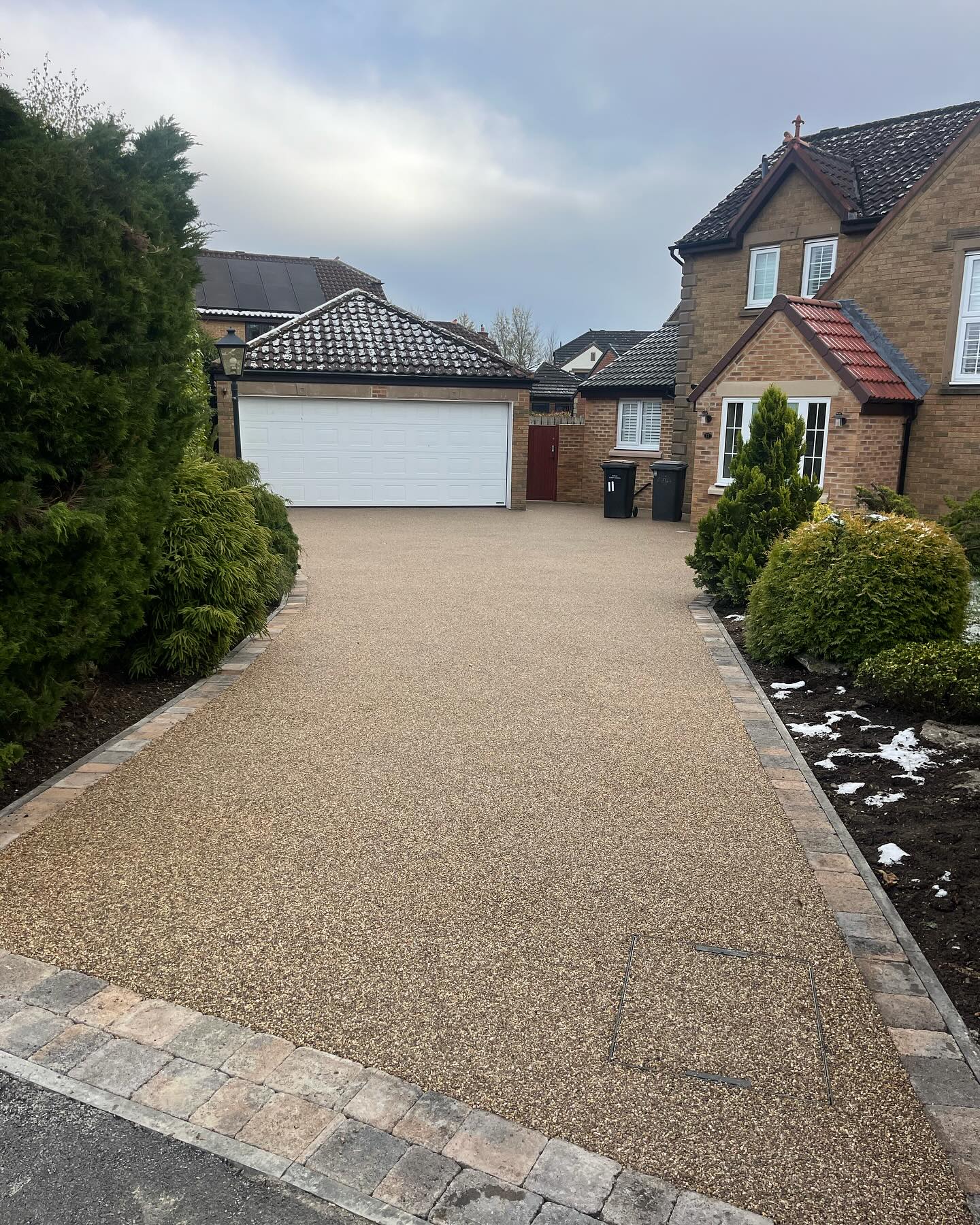
A resin driveway is often chosen for its clean finish and permeability, but the visible surface is only one part of the overall system. What really determines how well it performs over time is the structure beneath it.
Understanding how resin driveway surfacing is built can help homeowners make informed decisions, avoid poor installations, and ensure long-term durability. Whether you are planning a new driveway or upgrading an existing one, knowing the layers and their purpose is key.
What are the main layers in resin driveway surfacing?
A properly installed resin system consists of several layers, each designed to support the one above it. Skipping or poorly installing any of these layers can compromise the entire driveway.
The core structure typically includes:
| Layer | Function |
| Subgrade | Existing ground, assessed for stability |
| Sub-base | Load-bearing foundation using aggregates |
| Base course | Tarmac or concrete for a smooth, solid base |
| Resin surface | Decorative and permeable top layer |
Each layer contributes to strength, drainage, and longevity.
How thick should each layer be?
Thickness plays a major role in the performance of resin driveway surfacing. While exact measurements depend on the project, there are typical guidelines installers follow.
Here is a general overview:
These dimensions ensure the driveway can handle daily use while maintaining a smooth and stable finish.
Why does the base course matter so much?
The base course acts as the platform for the resin layer. Without a solid base, the surface may crack, shift, or wear unevenly.
A high-quality base course should:
Most installers use either permeable tarmac or concrete, depending on the design and drainage requirements.
What makes resin driveways permeable?
One of the key benefits of resin driveways is their ability to allow water to pass through the surface, reducing puddles and improving drainage.
This is achieved through:
Permeability is especially valuable in areas with frequent rainfall, helping to prevent water build-up and surface damage.
Is the resin layer just decorative?
While the top layer provides the visual appeal, it also serves a functional purpose. The resin-bound surface is designed to be:
However, it relies entirely on the strength of the underlying layers. Even the best finish cannot compensate for poor groundwork.
How does structure affect the lifespan?
The lifespan of a driveway is directly linked to how well it is constructed. A properly installed system can last for many years with minimal maintenance.
Factors that influence longevity include:
When all elements are correctly installed, resin driveways can provide a reliable and long-lasting solution for homeowners.
Can the structure vary between properties?
Yes, every property is different. Ground conditions, slope, and usage all influence the final design.
For example:
This is why a professional assessment is essential before installation begins.
Choose your preferred outdoor space finish?

Resin

Tarmac
It just takes 2 minutes
And then you can book a free consultation
What happens if layers are installed incorrectly?
Problems with installation often stem from shortcuts taken during construction. These issues may not appear immediately but can develop over time.
Common signs of poor installation include:
Ensuring each layer is installed correctly from the start helps avoid costly repairs later.
How do professionals ensure correct installation?
Experienced installers follow a structured process and use specialised equipment to achieve consistent results.
This includes:
Attention to detail at every stage ensures the final surface performs as intended.
Case example: Building a stable driveway structure
A homeowner wanted to replace an uneven driveway that frequently collected water. The original surface lacked proper layering and had begun to fail.
The installation process involved:
The finished driveway provided a level, durable surface with effective drainage, resolving the previous issues.
How can you compare installation quality?
When reviewing quotes or speaking to installers, it is important to understand what is included in the build-up.
Look for:
A professional installer will be transparent about their process and willing to explain each stage.
Resin driveways are more than just a decorative upgrade. Their performance depends on a carefully designed structure, with each layer playing a vital role in strength, drainage, and longevity.
By understanding how resin driveway surfacing works, homeowners can make more informed decisions and choose installations that stand the test of time. A well-built driveway not only enhances appearance but also provides reliable performance for years to come.
Related articles



Choose your preferred outdoor space finish?
Resin
Tarmac
At a glance
A resin driveway is often chosen for its clean finish and permeability, but the visible surface is only one part of the overall system. What really determines how well it performs over time is the structure beneath it.
Understanding how resin driveway surfacing is built can help homeowners make informed decisions, avoid poor installations, and ensure long-term durability. Whether you are planning a new driveway or upgrading an existing one, knowing the layers and their purpose is key.
What are the main layers in resin driveway surfacing?
A properly installed resin system consists of several layers, each designed to support the one above it. Skipping or poorly installing any of these layers can compromise the entire driveway.
The core structure typically includes:
| Layer | Function |
| Subgrade | Existing ground, assessed for stability |
| Sub-base | Load-bearing foundation using aggregates |
| Base course | Tarmac or concrete for a smooth, solid base |
| Resin surface | Decorative and permeable top layer |
Each layer contributes to strength, drainage, and longevity.
How thick should each layer be?
Thickness plays a major role in the performance of resin driveway surfacing. While exact measurements depend on the project, there are typical guidelines installers follow.
Here is a general overview:
These dimensions ensure the driveway can handle daily use while maintaining a smooth and stable finish.
Why does the base course matter so much?
The base course acts as the platform for the resin layer. Without a solid base, the surface may crack, shift, or wear unevenly.
A high-quality base course should:
Most installers use either permeable tarmac or concrete, depending on the design and drainage requirements.
What makes resin driveways permeable?
One of the key benefits of resin driveways is their ability to allow water to pass through the surface, reducing puddles and improving drainage.
This is achieved through:
Permeability is especially valuable in areas with frequent rainfall, helping to prevent water build-up and surface damage.
Is the resin layer just decorative?
While the top layer provides the visual appeal, it also serves a functional purpose. The resin-bound surface is designed to be:
However, it relies entirely on the strength of the underlying layers. Even the best finish cannot compensate for poor groundwork.
How does structure affect the lifespan?
The lifespan of a driveway is directly linked to how well it is constructed. A properly installed system can last for many years with minimal maintenance.
Factors that influence longevity include:
When all elements are correctly installed, resin driveways can provide a reliable and long-lasting solution for homeowners.
Can the structure vary between properties?
Yes, every property is different. Ground conditions, slope, and usage all influence the final design.
For example:
This is why a professional assessment is essential before installation begins.
Choose your preferred outdoor space finish?
Resin
Tarmac
It just takes 2 minutes
And then you can book a free consultation
What happens if layers are installed incorrectly?
Problems with installation often stem from shortcuts taken during construction. These issues may not appear immediately but can develop over time.
Common signs of poor installation include:
Ensuring each layer is installed correctly from the start helps avoid costly repairs later.
How do professionals ensure correct installation?
Experienced installers follow a structured process and use specialised equipment to achieve consistent results.
This includes:
Attention to detail at every stage ensures the final surface performs as intended.
Case example: Building a stable driveway structure
A homeowner wanted to replace an uneven driveway that frequently collected water. The original surface lacked proper layering and had begun to fail.
The installation process involved:
The finished driveway provided a level, durable surface with effective drainage, resolving the previous issues.
How can you compare installation quality?
When reviewing quotes or speaking to installers, it is important to understand what is included in the build-up.
Look for:
A professional installer will be transparent about their process and willing to explain each stage.
Resin driveways are more than just a decorative upgrade. Their performance depends on a carefully designed structure, with each layer playing a vital role in strength, drainage, and longevity.
By understanding how resin driveway surfacing works, homeowners can make more informed decisions and choose installations that stand the test of time. A well-built driveway not only enhances appearance but also provides reliable performance for years to come.
Related articles
Choose your preferred outdoor space finish?
Resin
Tarmac


