 70 Morley Cresent, Kelloe, Durham DH64NS
Everything You Need to Know About Resin Path Durability & Weather Resistance
Garden paths are often overlooked when planning outdoor improvements, yet they are exposed to the same weather conditions as driveways…

Why you can trust our content
At a glance
Garden paths are often overlooked when planning outdoor improvements, yet they are exposed to the same weather conditions as driveways and patios. From prolonged rain to freezing temperatures, a path needs to cope with year-round use without cracking, shifting or becoming slippery.
Resin-bound surfacing has become a popular option for residential paths thanks to its smooth finish and permeability. This guide explains how resin paths perform in the UK climate, what affects their durability, and what homeowners in Durham should consider before installation.
If you are weighing up surface options for your garden or access path, speaking to a specialist early can help avoid costly mistakes later.
What makes resin paths durable in UK weather conditions?
Durability comes from how resin-bound systems are constructed rather than the surface alone. Resin paths are made by mixing decorative aggregates with a clear resin binder, creating a strong yet flexible surface.
Key durability features include:
When installed correctly, resin paths cope well with the typical wet, cold and occasionally hot conditions seen across the North East.
How do resin paths perform during heavy rainfall?
One of the biggest advantages of resin paths is permeability. Rainwater drains through the surface rather than pooling on top, reducing surface water issues.
This drainage capability helps to:
For gardens with poor natural drainage, resin paths provide a practical alternative to non-permeable paving.
Are resin paths resistant to frost and freezing temperatures?
Yes, resin-bound systems are designed to cope with freeze-thaw cycles. Because water drains through the surface, there is less moisture trapped that could freeze and expand.
Compared to traditional paving slabs, resin paths are less likely to:
This makes them particularly suitable for exposed garden areas and access routes used throughout winter.
Do resin paths become slippery in wet weather?
A common concern is whether resin surfaces become slippery when wet. In practice, resin paths offer good slip resistance due to the textured aggregate finish.
Additional factors that improve safety include:
Proper installation and occasional cleaning help maintain grip throughout the year.
What affects the lifespan of a resin path?
Several factors influence how long a resin path will last. While the surface itself is hard-wearing, the groundwork beneath it is just as important.
Key lifespan factors include:
When installed by a qualified resin driveway specialist, paths can last well over a decade with minimal maintenance.
How much maintenance do resin paths require?
Resin paths are considered low maintenance compared to many alternatives. Regular sweeping and occasional washing are usually sufficient.
Maintenance typically involves:
There is no need for re-sanding or frequent repairs, which helps keep long-term upkeep costs predictable.
How does installation quality impact weather resistance?
Even the best materials can fail if installation standards are poor. Weather resistance relies on proper curing, correct temperatures during installation, and suitable base preparation.
A professional installer will assess:
This attention to detail helps ensure the surface performs consistently throughout the seasons.If you are comparing options, requesting a detailed survey is a sensible first step.
Typical example: resin path installation for a Durham garden
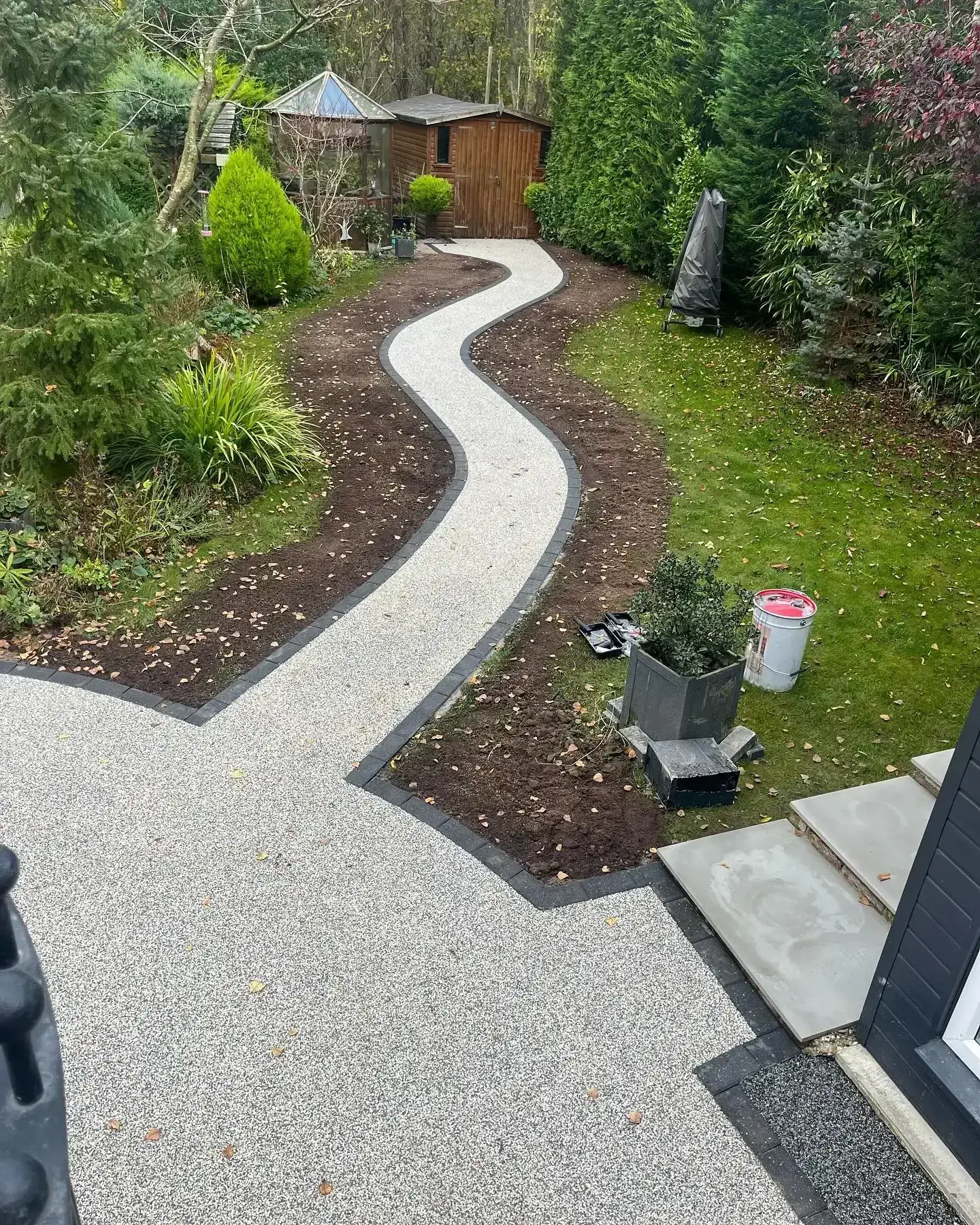
A common scenario involves a rear garden path replacing old concrete slabs. The original path may crack and hold water after rain, making it unpleasant to use.
By installing a resin-bound path over a properly prepared base, homeowners gain:
This approach works well for both modern and traditional garden designs.
What does resin path installation cost depend on?
While resin paths are durable, costs can vary depending on several factors. Resin path installation cost is influenced by:
Understanding these factors helps homeowners budget realistically and compare quotations more effectively.
Choose your preferred outdoor space finish?

Resin

Tarmac
It just takes 2 minutes
And then you can book a free consultation
Resin paths offer a practical balance between appearance, durability and weather resistance. Their ability to drain water, resist frost damage and maintain a safe surface makes them well suited to UK gardens.
For homeowners considering resin paths as a long-term solution, professional installation and proper groundwork are essential. North East Surfacing provides experienced guidance to help ensure your path performs well in all seasons.
If you would like tailored advice or a site assessment, you can contact our team to discuss your options in more detail.
Related articles


Choose your preferred outdoor space finish?
Resin
Tarmac
At a glance
Garden paths are often overlooked when planning outdoor improvements, yet they are exposed to the same weather conditions as driveways and patios. From prolonged rain to freezing temperatures, a path needs to cope with year-round use without cracking, shifting or becoming slippery.
Resin-bound surfacing has become a popular option for residential paths thanks to its smooth finish and permeability. This guide explains how resin paths perform in the UK climate, what affects their durability, and what homeowners in Durham should consider before installation.
If you are weighing up surface options for your garden or access path, speaking to a specialist early can help avoid costly mistakes later.
What makes resin paths durable in UK weather conditions?
Durability comes from how resin-bound systems are constructed rather than the surface alone. Resin paths are made by mixing decorative aggregates with a clear resin binder, creating a strong yet flexible surface.
Key durability features include:
When installed correctly, resin paths cope well with the typical wet, cold and occasionally hot conditions seen across the North East.
How do resin paths perform during heavy rainfall?
One of the biggest advantages of resin paths is permeability. Rainwater drains through the surface rather than pooling on top, reducing surface water issues.
This drainage capability helps to:
For gardens with poor natural drainage, resin paths provide a practical alternative to non-permeable paving.
Are resin paths resistant to frost and freezing temperatures?
Yes, resin-bound systems are designed to cope with freeze-thaw cycles. Because water drains through the surface, there is less moisture trapped that could freeze and expand.
Compared to traditional paving slabs, resin paths are less likely to:
This makes them particularly suitable for exposed garden areas and access routes used throughout winter.
Do resin paths become slippery in wet weather?
A common concern is whether resin surfaces become slippery when wet. In practice, resin paths offer good slip resistance due to the textured aggregate finish.
Additional factors that improve safety include:
Proper installation and occasional cleaning help maintain grip throughout the year.
What affects the lifespan of a resin path?
Several factors influence how long a resin path will last. While the surface itself is hard-wearing, the groundwork beneath it is just as important.
Key lifespan factors include:
When installed by a qualified resin driveway specialist, paths can last well over a decade with minimal maintenance.
How much maintenance do resin paths require?
Resin paths are considered low maintenance compared to many alternatives. Regular sweeping and occasional washing are usually sufficient.
Maintenance typically involves:
There is no need for re-sanding or frequent repairs, which helps keep long-term upkeep costs predictable.
How does installation quality impact weather resistance?
Even the best materials can fail if installation standards are poor. Weather resistance relies on proper curing, correct temperatures during installation, and suitable base preparation.
A professional installer will assess:
This attention to detail helps ensure the surface performs consistently throughout the seasons.If you are comparing options, requesting a detailed survey is a sensible first step.
Typical example: resin path installation for a Durham garden
A common scenario involves a rear garden path replacing old concrete slabs. The original path may crack and hold water after rain, making it unpleasant to use.
By installing a resin-bound path over a properly prepared base, homeowners gain:
This approach works well for both modern and traditional garden designs.
What does resin path installation cost depend on?
While resin paths are durable, costs can vary depending on several factors. Resin path installation cost is influenced by:
Understanding these factors helps homeowners budget realistically and compare quotations more effectively.
Choose your preferred outdoor space finish?
Resin
Tarmac
It just takes 2 minutes
And then you can book a free consultation
Resin paths offer a practical balance between appearance, durability and weather resistance. Their ability to drain water, resist frost damage and maintain a safe surface makes them well suited to UK gardens.
For homeowners considering resin paths as a long-term solution, professional installation and proper groundwork are essential. North East Surfacing provides experienced guidance to help ensure your path performs well in all seasons.
If you would like tailored advice or a site assessment, you can contact our team to discuss your options in more detail.
Related articles
Choose your preferred outdoor space finish?
Resin
Tarmac


