 70 Morley Cresent, Kelloe, Durham DH64NS
Resin Driveway Installers Near Me: What Technical Standards Should They Follow?
Searching for reliable driveway contractors can feel overwhelming, especially when every company promises high-quality results. While appearance is important, the…

Why you can trust our content
At a glance
Searching for reliable driveway contractors can feel overwhelming, especially when every company promises high-quality results. While appearance is important, the real difference lies in how well the installation is carried out.
If you are looking for resin driveway installers near me, understanding the technical standards they should follow can help you choose a contractor who delivers lasting results rather than short-term fixes.
What standards should resin driveway installers follow?
Professional installers should work to recognised industry practices that ensure consistency, durability, and safety.
Key technical standards include:
Following these principles helps create a driveway that performs well in all conditions.
Why is sub-base preparation a key standard?
The sub-base is the foundation of the entire driveway. Without it, the surface is vulnerable to movement, cracking, and water damage.
A properly installed sub-base should:
Any resin driveway specialist will prioritise this stage to ensure long-term stability.
What installation depths should be used?
Depth plays a critical role in how well a driveway performs over time. Installers should adjust depths based on ground conditions and usage.
Typical guidelines include:
| Layer | Recommended Depth |
| Sub-base | 150mm to 250mm |
| Base course | 50mm to 100mm |
| Resin surface | 15mm to 20mm |
These measurements provide a balance between strength and permeability.
How important is drainage in resin installations?
Drainage is one of the defining features of resin surfaces. However, it only works effectively when supported by proper installation.
Installers should ensure:
Poor drainage can lead to long-term damage, even if the surface initially looks well-installed.
Should installers carry out a site survey?
A professional approach always begins with a detailed site survey. This allows installers to assess ground conditions and plan the installation accordingly.
A survey should identify:
When searching for resin driveway installers near me, choosing a company that offers a thorough survey is a strong indicator of quality.
What materials should a resin driveway specialist use?
The quality of materials has a direct impact on the performance of the driveway.
Installers should use:
Using inferior materials can reduce lifespan and lead to early deterioration.
How do professionals ensure consistent results?
Consistency comes from following a structured installation process and using the right equipment.
This includes:
Experienced installers rely on proven methods rather than shortcuts.
What are the risks of ignoring technical standards?
Skipping or reducing key steps can lead to serious issues over time. These problems may not appear immediately but can develop as the driveway is used.
Common risks include:
Ensuring standards are followed from the beginning helps avoid costly repairs later.
How can you check if an installer meets these standards?
Not all contractors openly discuss their technical process, so it is important to ask the right questions.
Look for:
A professional installer will be transparent about how they work and why each step is important.
Case example: Choosing the right installer
A homeowner compared two contractors found through a search for local installers. One offered a quick installation at a lower price, while the other provided a detailed breakdown of preparation, materials, and drainage.
The homeowner chose the second option. The result was a stable, long-lasting driveway that performed well through seasonal changes, while nearby properties with cheaper installations experienced issues within a short time.
Are certifications or guarantees important?
While not always mandatory, certifications and guarantees can provide added reassurance.
These may include:
They demonstrate a commitment to quality and accountability.
Choose your preferred outdoor space finish?

Resin

Tarmac
It just takes 2 minutes
And then you can book a free consultation
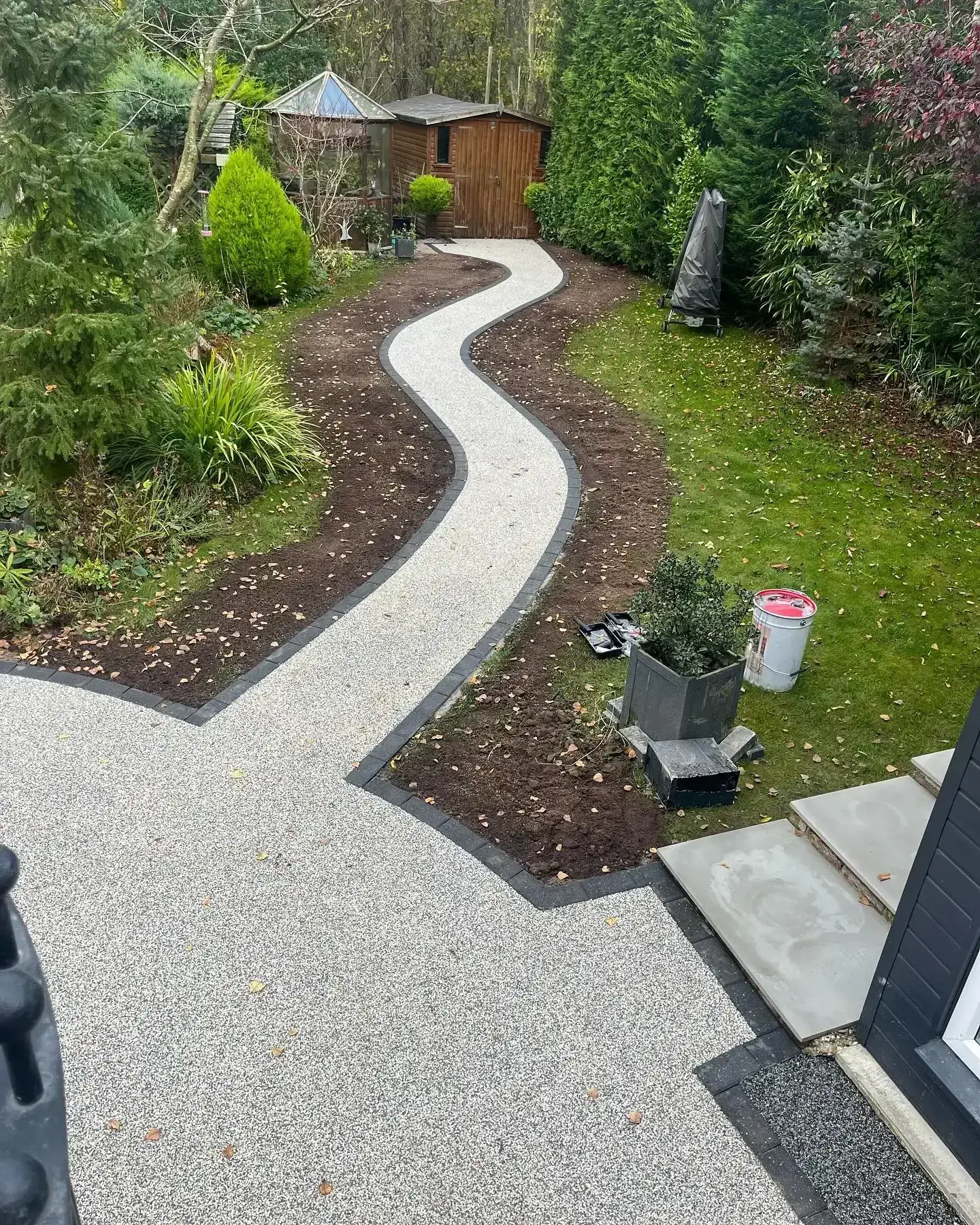
Resin paths offer a practical and attractive solution for outdoor spaces, but their success depends on careful construction. From excavation to the final surface, each stage plays a role in ensuring long-term stability.
By understanding how resin paths are built and what influences their performance, homeowners can make more confident decisions and invest in a solution that stands the test of time.
Related articles




Choose your preferred outdoor space finish?
Resin
Tarmac
At a glance
Searching for reliable driveway contractors can feel overwhelming, especially when every company promises high-quality results. While appearance is important, the real difference lies in how well the installation is carried out.
If you are looking for resin driveway installers near me, understanding the technical standards they should follow can help you choose a contractor who delivers lasting results rather than short-term fixes.
What standards should resin driveway installers follow?
Professional installers should work to recognised industry practices that ensure consistency, durability, and safety.
Key technical standards include:
Following these principles helps create a driveway that performs well in all conditions.
Why is sub-base preparation a key standard?
The sub-base is the foundation of the entire driveway. Without it, the surface is vulnerable to movement, cracking, and water damage.
A properly installed sub-base should:
Any resin driveway specialist will prioritise this stage to ensure long-term stability.
What installation depths should be used?
Depth plays a critical role in how well a driveway performs over time. Installers should adjust depths based on ground conditions and usage.
Typical guidelines include:
| Layer | Recommended Depth |
| Sub-base | 150mm to 250mm |
| Base course | 50mm to 100mm |
| Resin surface | 15mm to 20mm |
These measurements provide a balance between strength and permeability.
How important is drainage in resin installations?
Drainage is one of the defining features of resin surfaces. However, it only works effectively when supported by proper installation.
Installers should ensure:
Poor drainage can lead to long-term damage, even if the surface initially looks well-installed.
Should installers carry out a site survey?
A professional approach always begins with a detailed site survey. This allows installers to assess ground conditions and plan the installation accordingly.
A survey should identify:
When searching for resin driveway installers near me, choosing a company that offers a thorough survey is a strong indicator of quality.
What materials should a resin driveway specialist use?
The quality of materials has a direct impact on the performance of the driveway.
Installers should use:
Using inferior materials can reduce lifespan and lead to early deterioration.
How do professionals ensure consistent results?
Consistency comes from following a structured installation process and using the right equipment.
This includes:
Experienced installers rely on proven methods rather than shortcuts.
What are the risks of ignoring technical standards?
Skipping or reducing key steps can lead to serious issues over time. These problems may not appear immediately but can develop as the driveway is used.
Common risks include:
Ensuring standards are followed from the beginning helps avoid costly repairs later.
How can you check if an installer meets these standards?
Not all contractors openly discuss their technical process, so it is important to ask the right questions.
Look for:
A professional installer will be transparent about how they work and why each step is important.
Case example: Choosing the right installer
A homeowner compared two contractors found through a search for local installers. One offered a quick installation at a lower price, while the other provided a detailed breakdown of preparation, materials, and drainage.
The homeowner chose the second option. The result was a stable, long-lasting driveway that performed well through seasonal changes, while nearby properties with cheaper installations experienced issues within a short time.
Are certifications or guarantees important?
While not always mandatory, certifications and guarantees can provide added reassurance.
These may include:
They demonstrate a commitment to quality and accountability.
Choose your preferred outdoor space finish?
Resin
Tarmac
It just takes 2 minutes
And then you can book a free consultation
Resin paths offer a practical and attractive solution for outdoor spaces, but their success depends on careful construction. From excavation to the final surface, each stage plays a role in ensuring long-term stability.
By understanding how resin paths are built and what influences their performance, homeowners can make more confident decisions and invest in a solution that stands the test of time.
Related articles
Choose your preferred outdoor space finish?
Resin
Tarmac


