 70 Morley Cresent, Kelloe, Durham DH64NS
Resin Patios Explained: Benefits, Lifespan and Maintenance in the UK Climate
A patio is one of those upgrades you notice every day. It changes how you use the garden, how easy…

Why you can trust our content

At a glance
A patio is one of those upgrades you notice every day. It changes how you use the garden, how easy it is to keep things tidy, and how the back of the house feels in summer and winter. If you’re weighing up surface options, resin is often shortlisted because it can deliver a clean finish without the constant joint maintenance that comes with some paving styles.
This guide explains what resin patios are, why they work well for many UK homes, and what you should do to keep them looking their best over time. It’s written for homeowners in Durham who want straight answers before booking anything.
What is a resin patio and how is it different from paving?
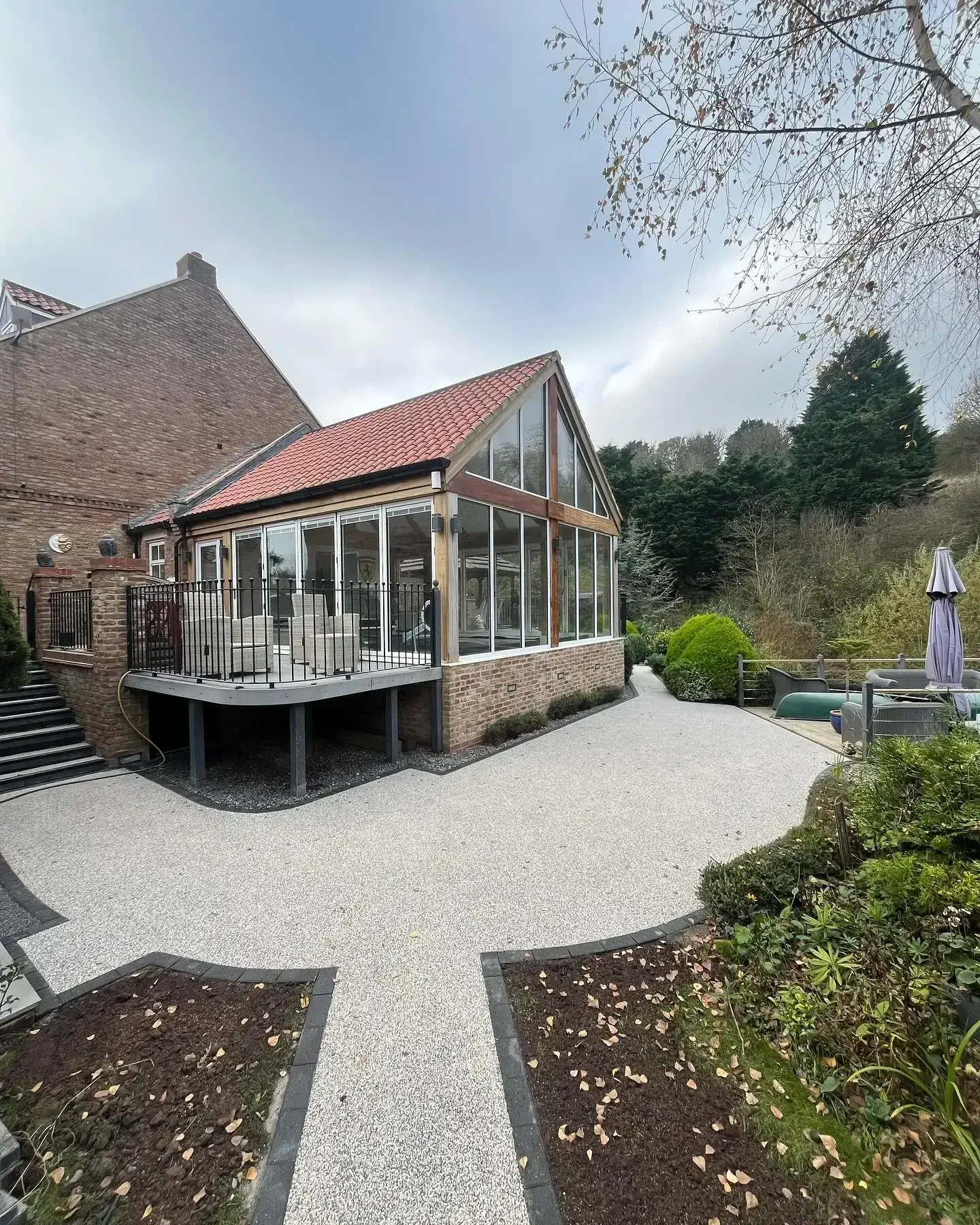
A resin patio is a hard surface created by mixing decorative stone aggregate with a clear resin binder, then laying it as a smooth, consistent layer over a prepared base. It’s not the same as loose gravel and it doesn’t rely on lots of separate slabs.
Compared with traditional paving, the difference is usually felt in three areas:
Many homeowners like resin because it can sit visually between “modern” and “natural”, depending on the stone blend and edging choices.
Are resin patios a good fit for the UK climate?
Yes, they can be, provided the patio is built correctly. The UK climate is demanding on any external surface: frequent rain, freeze-thaw cycles in winter, and periods of shade that encourage moss or algae.
A resin patio tends to perform well because:
That said, climate performance is not just about the resin. It’s about the base, the levels, and how water moves off the surface during heavy rainfall. In areas of Durham where gardens can be shaded by fencing, trees, or neighbouring buildings, maintenance habits matter as much as material choice.
What are the main benefits of resin patios?
For many households, the benefits are practical as well as visual. The right finish can make a garden feel more usable year-round.
Common benefits include:
If you’re trying to make a small garden feel larger, the seamless look of resin patios can help create that “one continuous space” feel, especially when paired with tidy edging.
How long do resin patios last?
Lifespan depends on the quality of the base, installation technique, and how the patio is used. A well-installed resin system can last for many years, but the most important point is that resin is a finish, not a structural fix.
The biggest factors affecting lifespan are:
If you’re comparing options, treat “lifespan” as something earned through good preparation. That’s true whether you choose resin, paving, or block.
What does maintenance look like across the seasons?
Resin maintenance is usually simple, but it’s not zero. The key is preventing dirt and organic growth from settling in.
Spring and summer
Autumn
Winter
In North East England, shaded patios can be more prone to moss. A gentle, consistent routine prevents most problems before they start.
What affects resin patio costs in Durham?
Homeowners often ask about resin patio installation cost because patios vary hugely in size and complexity. It’s not just square metres, it’s also about base work, edging, and detailing.
Costs are commonly influenced by:
To help you compare quotes sensibly, here’s a clear checklist of what should be included.
| Cost Element | What it covers | Why it matters |
| Site preparation | Removal, waste, ground levelling | Prevents movement and uneven finish |
| Base build-up | Concrete or asphalt base work | Drives long-term strength |
| Edging and borders | Kerbs, metal edging, or set borders | Protects edges and creates clean lines |
| Resin layer | Mix, laying depth, finishing | Impacts appearance and durability |
| Access and logistics | Labour movement, material handling | Affects time and practical feasibility |
If a quote seems low, check whether it assumes the base is already perfect. Base shortcuts are a common reason patios fail early.
Choose your preferred outdoor space finish?

Resin

Tarmac
It just takes 2 minutes
And then you can book a free consultation
What should you ask an installer before you book?
Choosing the right contractor matters just as much as material selection. A patio is a visible, high-use part of the home, so you want clear answers up front.
Good questions include:
It can also help to choose someone who understands how resin surfaces work across different areas of a property. A resin driveway specialist may have broader experience of load, drainage, and finish transitions, which often translates well to patio work.
Example scenario: a typical Durham patio refresh
A common Durham setup is an older patio made from uneven flags that have shifted over time, creating wobbly areas and stubborn weeds in the joints. The homeowner wants a smoother seating area and safer footing, especially in damp months.
In a sensible upgrade, the old surface is removed, the area is levelled, and a stable base is installed with proper edge restraint. Once the resin finish is laid and cured, the patio becomes easier to sweep, easier to wash down, and more pleasant to use as a consistent outdoor room rather than a patchwork of slabs.
Resin can be a strong patio option for homeowners who want a neat, practical finish that suits the UK climate, especially when the base and drainage are done properly. If you focus on preparation, edging, and a sensible maintenance routine, resin patios can stay looking smart for years.
Related articles

Choose your preferred outdoor space finish?
Resin
Tarmac
At a glance
A patio is one of those upgrades you notice every day. It changes how you use the garden, how easy it is to keep things tidy, and how the back of the house feels in summer and winter. If you’re weighing up surface options, resin is often shortlisted because it can deliver a clean finish without the constant joint maintenance that comes with some paving styles.
This guide explains what resin patios are, why they work well for many UK homes, and what you should do to keep them looking their best over time. It’s written for homeowners in Durham who want straight answers before booking anything.
What is a resin patio and how is it different from paving?
A resin patio is a hard surface created by mixing decorative stone aggregate with a clear resin binder, then laying it as a smooth, consistent layer over a prepared base. It’s not the same as loose gravel and it doesn’t rely on lots of separate slabs.
Compared with traditional paving, the difference is usually felt in three areas:
Many homeowners like resin because it can sit visually between “modern” and “natural”, depending on the stone blend and edging choices.
Are resin patios a good fit for the UK climate?
Yes, they can be, provided the patio is built correctly. The UK climate is demanding on any external surface: frequent rain, freeze-thaw cycles in winter, and periods of shade that encourage moss or algae.
A resin patio tends to perform well because:
That said, climate performance is not just about the resin. It’s about the base, the levels, and how water moves off the surface during heavy rainfall. In areas of Durham where gardens can be shaded by fencing, trees, or neighbouring buildings, maintenance habits matter as much as material choice.
What are the main benefits of resin patios?
For many households, the benefits are practical as well as visual. The right finish can make a garden feel more usable year-round.
Common benefits include:
If you’re trying to make a small garden feel larger, the seamless look of resin patios can help create that “one continuous space” feel, especially when paired with tidy edging.
How long do resin patios last?
Lifespan depends on the quality of the base, installation technique, and how the patio is used. A well-installed resin system can last for many years, but the most important point is that resin is a finish, not a structural fix.
The biggest factors affecting lifespan are:
If you’re comparing options, treat “lifespan” as something earned through good preparation. That’s true whether you choose resin, paving, or block.
What does maintenance look like across the seasons?
Resin maintenance is usually simple, but it’s not zero. The key is preventing dirt and organic growth from settling in.
Spring and summer
Autumn
Winter
In North East England, shaded patios can be more prone to moss. A gentle, consistent routine prevents most problems before they start.
What affects resin patio costs in Durham?
Homeowners often ask about resin patio installation cost because patios vary hugely in size and complexity. It’s not just square metres, it’s also about base work, edging, and detailing.
Costs are commonly influenced by:
To help you compare quotes sensibly, here’s a clear checklist of what should be included.
| Cost Element | What it covers | Why it matters |
| Site preparation | Removal, waste, ground levelling | Prevents movement and uneven finish |
| Base build-up | Concrete or asphalt base work | Drives long-term strength |
| Edging and borders | Kerbs, metal edging, or set borders | Protects edges and creates clean lines |
| Resin layer | Mix, laying depth, finishing | Impacts appearance and durability |
| Access and logistics | Labour movement, material handling | Affects time and practical feasibility |
If a quote seems low, check whether it assumes the base is already perfect. Base shortcuts are a common reason patios fail early.
Choose your preferred outdoor space finish?
Resin
Tarmac
It just takes 2 minutes
And then you can book a free consultation
What should you ask an installer before you book?
Choosing the right contractor matters just as much as material selection. A patio is a visible, high-use part of the home, so you want clear answers up front.
Good questions include:
It can also help to choose someone who understands how resin surfaces work across different areas of a property. A resin driveway specialist may have broader experience of load, drainage, and finish transitions, which often translates well to patio work.
Example scenario: a typical Durham patio refresh
A common Durham setup is an older patio made from uneven flags that have shifted over time, creating wobbly areas and stubborn weeds in the joints. The homeowner wants a smoother seating area and safer footing, especially in damp months.
In a sensible upgrade, the old surface is removed, the area is levelled, and a stable base is installed with proper edge restraint. Once the resin finish is laid and cured, the patio becomes easier to sweep, easier to wash down, and more pleasant to use as a consistent outdoor room rather than a patchwork of slabs.
Resin can be a strong patio option for homeowners who want a neat, practical finish that suits the UK climate, especially when the base and drainage are done properly. If you focus on preparation, edging, and a sensible maintenance routine, resin patios can stay looking smart for years.
Related articles
Choose your preferred outdoor space finish?
Resin
Tarmac


