 70 Morley Cresent, Kelloe, Durham DH64NS
What Is a Resin Driveway? A Complete Introduction for Durham Homeowners
If you’re exploring ways to refresh your front garden, parking area, or entrance path, you’ve probably noticed resin driveways popping…

Why you can trust our content

At a glance
If you’re exploring ways to refresh your front garden, parking area, or entrance path, you’ve probably noticed resin driveways popping up across modern UK homes. They’re popular for good reason: they look smart, feel solid underfoot, and can be designed to suit everything from period terraces to new-builds.
This guide is written for homeowners who want a clear, practical explanation of what resin surfacing actually is, how it differs from other options, and what you should check before committing to an installation in Durham.
What is a resin driveway, in simple terms?
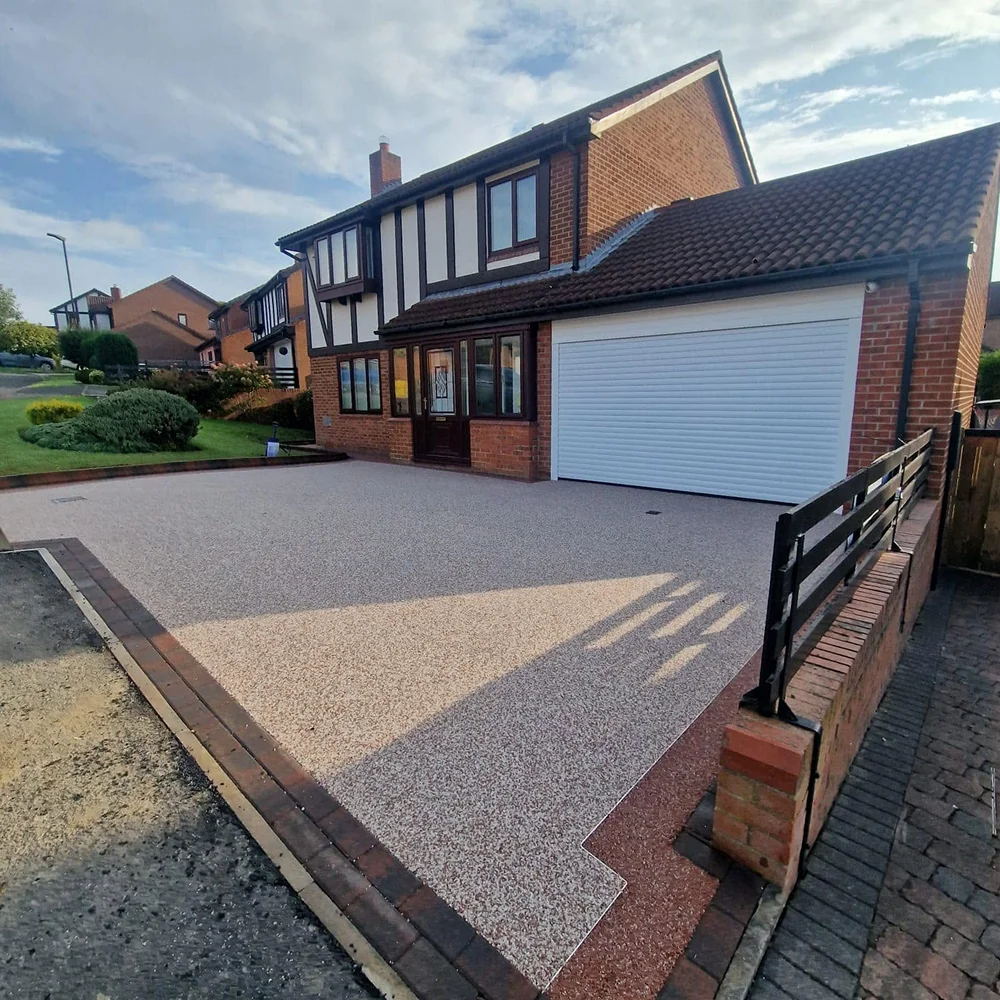
A resin driveway is a hard surface made by combining decorative stone aggregate with a clear resin binder, then laying it over a prepared base. Once cured, it forms a smooth, durable finish that can be designed in different colours and textures.
There are two main systems you’ll hear about:
For most domestic projects, resin bound is the system homeowners tend to prefer because it can support drainage-friendly designs and creates a more consistent surface.
Why do homeowners in Durham choose resin?
Resin tends to appeal to people who want a driveway that looks premium without feeling “too fussy”. It can also be a strong option where you want a finish that complements brickwork and stone common in the region.
Typical reasons homeowners choose it include:
It’s worth noting: the final result depends heavily on the base preparation and installation method, not just the surface material.
Is a resin driveway permeable and does that matter?
Often, yes, particularly with resin bound systems. Permeability matters because it helps surface water drain through the finish rather than pooling on top. This can be helpful on properties where water tends to sit near the entrance or where you want to reduce puddles.
However, permeability does not mean “no planning or drainage considerations ever”. The correct approach depends on:
A good installer will assess drainage at survey stage and recommend the right build-up for your driveway, rather than assuming one approach fits every home.
What’s the installation process for a resin driveway?
A quality installation is more about preparation than people expect. The surface layer is the finishing touch, but the base is what delivers strength and longevity.
A typical process looks like this:
How long do resin driveways last and what affects lifespan?
Lifespan depends on traffic levels, base quality, and maintenance. A well-installed resin system on a suitable base can last many years, but it’s not “fit and forget”.
What usually affects longevity most:
Simple maintenance tips
Choose your preferred outdoor space finish?

Resin

Tarmac
It just takes 2 minutes
And then you can book a free consultation
Resin vs other driveway options: what’s the real difference?
Homeowners often compare resin to block paving, tarmac, or gravel. Each has its place, but they behave differently in day-to-day life.
Here’s a quick comparison to help you make an informed choice:
| Surface Type | Look & Style | Maintenance | Drainage | Common Watchouts |
| Resin bound | Modern, seamless | Low to moderate | Often permeable | Needs correct base and edging |
| Block paving | Traditional, flexible | Moderate | Varies | Weeds in joints if not maintained |
| Tarmac | Simple, clean | Low | Typically non-permeable | Can fade, less design flexibility |
| Gravel | Rustic, cost-effective | Ongoing | Good | Tracking, movement, regular topping up |
If you’re deciding for a resin driveway Durham property, the best option often comes down to your priorities: aesthetics, upkeep, drainage needs, and how the area is used (daily parking, occasional access, or mixed use).
What should you check before hiring an installer?
Choosing the right installer is where many projects succeed or fail. You’re not just buying a surface, you’re buying the preparation, workmanship, and finish detail.
Ask about:
If you’re comparing quotes, make sure you’re comparing like-for-like. Two prices can look similar while offering very different base preparation. This is also where reputable resin driveway services Durham providers stand out: they explain the build-up, not just the finish.
Example scenario: a typical Durham driveway upgrade
Imagine a family home with an older, tired entrance where water pools near the garage after heavy rain. The homeowner wants a smarter look and a surface that feels stable for prams, bikes, and daily parking.
A sensible approach might involve repairing or replacing sections of the base, adjusting levels to improve water run-off, adding clean edging, and then installing a resin system designed for domestic vehicle use. The result is a driveway that looks sharper, feels easier to maintain, and performs better through wet months.
This kind of outcome is less about the “resin look” and more about getting the groundwork right from the start.
A resin driveway can be an excellent choice if you want a neat, modern finish that’s practical for everyday life. The key is treating it as a full build-up project, not just a top layer. A careful survey, correct base preparation, and quality installation methods are what create a driveway that still looks great years down the line.
Related articles
Choose your preferred outdoor space finish?
Resin
Tarmac
At a glance
If you’re exploring ways to refresh your front garden, parking area, or entrance path, you’ve probably noticed resin driveways popping up across modern UK homes. They’re popular for good reason: they look smart, feel solid underfoot, and can be designed to suit everything from period terraces to new-builds.
This guide is written for homeowners who want a clear, practical explanation of what resin surfacing actually is, how it differs from other options, and what you should check before committing to an installation in Durham.
What is a resin driveway, in simple terms?
A resin driveway is a hard surface made by combining decorative stone aggregate with a clear resin binder, then laying it over a prepared base. Once cured, it forms a smooth, durable finish that can be designed in different colours and textures.
There are two main systems you’ll hear about:
For most domestic projects, resin bound is the system homeowners tend to prefer because it can support drainage-friendly designs and creates a more consistent surface.
Why do homeowners in Durham choose resin?
Resin tends to appeal to people who want a driveway that looks premium without feeling “too fussy”. It can also be a strong option where you want a finish that complements brickwork and stone common in the region.
Typical reasons homeowners choose it include:
It’s worth noting: the final result depends heavily on the base preparation and installation method, not just the surface material.
Is a resin driveway permeable and does that matter?
Often, yes, particularly with resin bound systems. Permeability matters because it helps surface water drain through the finish rather than pooling on top. This can be helpful on properties where water tends to sit near the entrance or where you want to reduce puddles.
However, permeability does not mean “no planning or drainage considerations ever”. The correct approach depends on:
A good installer will assess drainage at survey stage and recommend the right build-up for your driveway, rather than assuming one approach fits every home.
What’s the installation process for a resin driveway?
A quality installation is more about preparation than people expect. The surface layer is the finishing touch, but the base is what delivers strength and longevity.
A typical process looks like this:
How long do resin driveways last and what affects lifespan?
Lifespan depends on traffic levels, base quality, and maintenance. A well-installed resin system on a suitable base can last many years, but it’s not “fit and forget”.
What usually affects longevity most:
Simple maintenance tips
Choose your preferred outdoor space finish?
Resin
Tarmac
It just takes 2 minutes
And then you can book a free consultation
Resin vs other driveway options: what’s the real difference?
Homeowners often compare resin to block paving, tarmac, or gravel. Each has its place, but they behave differently in day-to-day life.
Here’s a quick comparison to help you make an informed choice:
| Surface Type | Look & Style | Maintenance | Drainage | Common Watchouts |
| Resin bound | Modern, seamless | Low to moderate | Often permeable | Needs correct base and edging |
| Block paving | Traditional, flexible | Moderate | Varies | Weeds in joints if not maintained |
| Tarmac | Simple, clean | Low | Typically non-permeable | Can fade, less design flexibility |
| Gravel | Rustic, cost-effective | Ongoing | Good | Tracking, movement, regular topping up |
If you’re deciding for a resin driveway Durham property, the best option often comes down to your priorities: aesthetics, upkeep, drainage needs, and how the area is used (daily parking, occasional access, or mixed use).
What should you check before hiring an installer?
Choosing the right installer is where many projects succeed or fail. You’re not just buying a surface, you’re buying the preparation, workmanship, and finish detail.
Ask about:
If you’re comparing quotes, make sure you’re comparing like-for-like. Two prices can look similar while offering very different base preparation. This is also where reputable resin driveway services Durham providers stand out: they explain the build-up, not just the finish.
Example scenario: a typical Durham driveway upgrade
Imagine a family home with an older, tired entrance where water pools near the garage after heavy rain. The homeowner wants a smarter look and a surface that feels stable for prams, bikes, and daily parking.
A sensible approach might involve repairing or replacing sections of the base, adjusting levels to improve water run-off, adding clean edging, and then installing a resin system designed for domestic vehicle use. The result is a driveway that looks sharper, feels easier to maintain, and performs better through wet months.
This kind of outcome is less about the “resin look” and more about getting the groundwork right from the start.
A resin driveway can be an excellent choice if you want a neat, modern finish that’s practical for everyday life. The key is treating it as a full build-up project, not just a top layer. A careful survey, correct base preparation, and quality installation methods are what create a driveway that still looks great years down the line.
Related articles
Choose your preferred outdoor space finish?
Resin
Tarmac


